
FCL Freight China-Argentina: 5 Hidden Costs Your Forwarder WON'T Tell You
1. The Labyrinth of “Local Charges” at Destination (Buenos Aires)
This is the classic hook. They offer you a very low Ocean Freight rate to Buenos Aires but inflate the arrival costs.
The Reality: Upon arrival at the Rio de la Plata, concepts like Handling Fee, Document Fee, and dollar-denominated port fees, which skyrocket, appear.
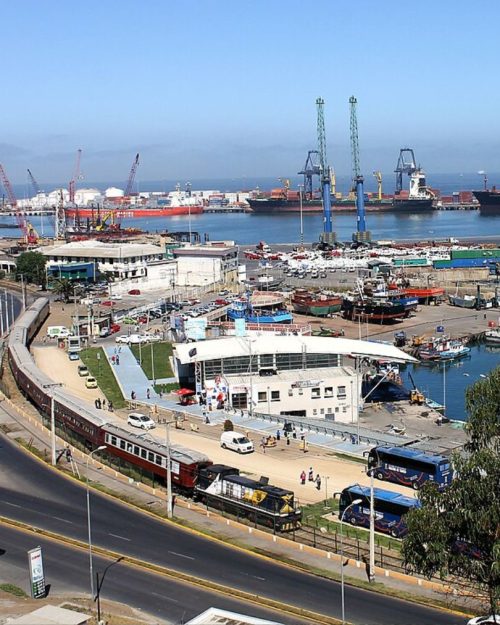
The Framex Differential: We don’t just break down these costs from day one. If we detect that the local costs in Buenos Aires will impact your margin, we automatically analyze the option of unloading in San Antonio (Chile), where cost structures are often more predictable and competitive.
2. The Difference Between Demurrage and Detention (and why it matters)
The clock starts ticking as soon as the container hits the ground.
Demurrage: Use of the full container inside the terminal.
Detention: Delay in returning the empty container. In Argentina, a transport strike or a blockade at the port entrance can consume your free days in hours. On the route via San Antonio, the dynamic changes: as it is international terrestrial transit (MIC/DTA) to Argentina, free time is negotiated considering the border crossing, providing another layer of operational security.
3. THBA vs. The Pacific Efficiency (Port of San Antonio)
While most forwarders fight for space in the Buenos Aires terminals (TRP, APM) or Exolgan, at Framex we look West.
The Atlantic Problem: The sea route to Buenos Aires is longer, and the terminals often have high, dollar-denominated handling charges (THC).
The Framex Solution (Via Chile): We use the Port of San Antonio as a strategic hub.
Shorter Transit Time: Ships from China arrive at the Pacific (San Antonio) sooner than the Atlantic.
Multimodal Logistics: We deconsolidate or execute customs transit towards Mendoza, Córdoba, or Buenos Aires via truck. This is an option we have mastered since our beginnings in Chile in 2012 and offers an agility that the Port of Buenos Aires sometimes cannot match.
4. Container Cleaning and Repair (The “Post-Return” Charge)
You returned the container, but two weeks later, an invoice arrives for “Chemical Washing.” Containers often suffer more wear and tear during long waits in congested ports.
Expert Tip: In our operation via San Antonio, the unit control is carried out in a different logistics chain, often with more agile return standards before crossing the mountain range (depending on the deconsolidation modality).
5. The Cost of “Rollover” at Origin (China)
If your forwarder doesn’t have negotiation power, your cargo stays off the ship in China.
Route Advantage: Shipping lines often have greater space availability (allocation) for direct services to the Pacific (Chile/Peru) than for long services to the Atlantic (Argentina/Brazil). Choosing the San Antonio route can be the difference between shipping this week or waiting until the next.
The “Bypass Buenos Aires” Strategy
Many importers in the interior of Argentina (Mendoza, Córdoba, Santa Fe) continue to bring their cargo through Buenos Aires “out of habit,” paying very expensive internal freight and suffering delays at the Buenos Aires port.
Framex’s Value Proposition: Thanks to our binational experience (Argentina-Chile), we validate whether your FCL cargo is suitable for Transit via Chile.
Time Gain: You save between 7 and 10 days of navigation by avoiding the trip around the Strait of Magellan or stops in Brazil.
Cost Certainty: By operating in San Antonio, you avoid the volatility and currency uncertainty of certain Argentine port costs until the final moment of nationalization at your inland customs office.
We are not just a forwarder that “moves boxes.” We are logistics architects. If San Antonio is faster and cheaper for your business, we will recommend it.
Conclusion: Cheap Can Be Expensive (If You Don’t Know the Route)
In foreign trade, predictability is worth more than an artificially low initial rate. At Framex, our culture of Excellence drives us to question the standard. Whether it’s via Buenos Aires, Zárate, or San Antonio, we design the route that protects your profitability.
FAQs
Is transit through San Antonio (Chile) legal for cargo to Argentina?
Yes, it is a completely legal and common modality known as International Customs Transit (MIC/DTA). The cargo travels under customs seal from Chile to the destination customs office in Argentina (e.g., Mendoza or Buenos Aires), where it is nationalized. Framex manages the complete binational documentation.
How do I know if the route via San Antonio is better for me than Buenos Aires?
It depends on your volume, your final location, and urgency. If you are in the interior of the country (Mendoza, Córdoba, etc.), or if sea transit time is critical, the Pacific route can be faster and reduce the risk of Storage in BA. We evaluate it in the quote, because for Framex, if San Antonio is faster and cheaper for your business, we will recommend it.
Which Incoterms are most exposed to these hidden costs?
FOB and EXW Incoterms are the most exposed, as the importer’s (buyer’s) responsibility begins much earlier. If your contract is CFR/CIF, the risk of Local Charges still exists, although it is more predictable. We always recommend expert advice starting with the Incoterm negotiation.
Do you want to evaluate whether the route via Chile is convenient for your next import?
We analyze your options via the Atlantic and Pacific to give you the truth, without fine print.
Lorem ipsum dolor sit amet, consectetur adipiscing elit. Ut elit tellus, luctus nec ullamcorper mattis, pulvinar dapibus leo.